Which ticket, and how to book
Dubrovnik folklore show tickets
Which Linđo Folklore Ensemble ticket to book in Dubrovnik: what the evening is, how the seasonal calendar works and who it suits best.
Reserve a seat for the show ↗Quick answer
Choose this show for roughly 70 minutes of live Croatian dance, klapa singing and orchestral music at Lazareti, just outside Ploče Gate. There is a single ticket type, covering the live show only. Because the show is seasonal, the booking calendar decides which evenings exist and when each begins. You can cancel free until 24 hours ahead, and a reservation can be paid for later.
Three ways to meet Croatian folklore in Dubrovnik
| This show | City events | Street klapa | |
|---|---|---|---|
| What it is | Ticketed 70-minute show | Ensemble at city events | Informal evening singing |
| Plannable | Yes, by calendar date | Partly, dates change | No |
| Seating | Seated | Varies by event | None |
| Best for | The full show, planned | Visitors already in town | Anyone leaving it to chance |
What the ticket is
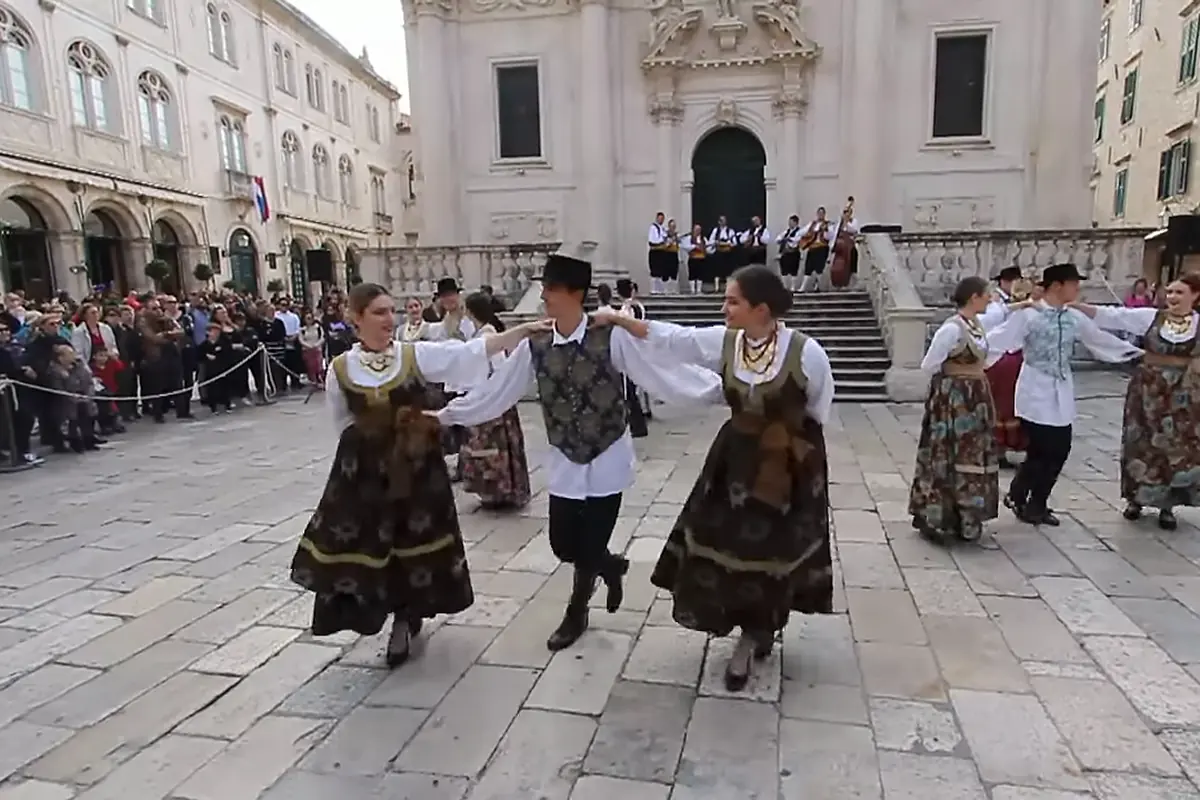
The ticket is for a live show by the Linđo Folklore Ensemble, a Dubrovnik amateur group named after the city's own circle dance. It runs about 70 minutes and is staged at Lazareti, Ulica Frana Supila 8, in the old quarantine complex east of the Old Town. Dancers in folk costume, singers from the ensemble's klapa and an orchestra share the stage, and the show is advertised with more than 100 performers. The ticket covers the live show and nothing else, so food, drink and getting there are your own plans. The booking page marks the show wheelchair accessible.
Who performs
The Linđo Folklore Ensemble is a Dubrovnik amateur company founded in the 1960s; sources give 1964 or 1965. Its name comes from linđo, the dance of the Dubrovnik coast, which Wikipedia says was named after a dance leader nicknamed Linđo from Župa Dubrovačka. The ethnologist Elsie Ivancich Dunin traces an authored, staged version of the dance into a city amateur ensemble established in 1965. Expect choreography built from folk dance, not a village celebration, and enjoy it as exactly that: rehearsed, costumed and tuned for an audience. Wikipedia adds that the ensemble keeps the tradition of the linđo alive, so the group is both a performing company and a custodian of the dance.
What kind of evening it is
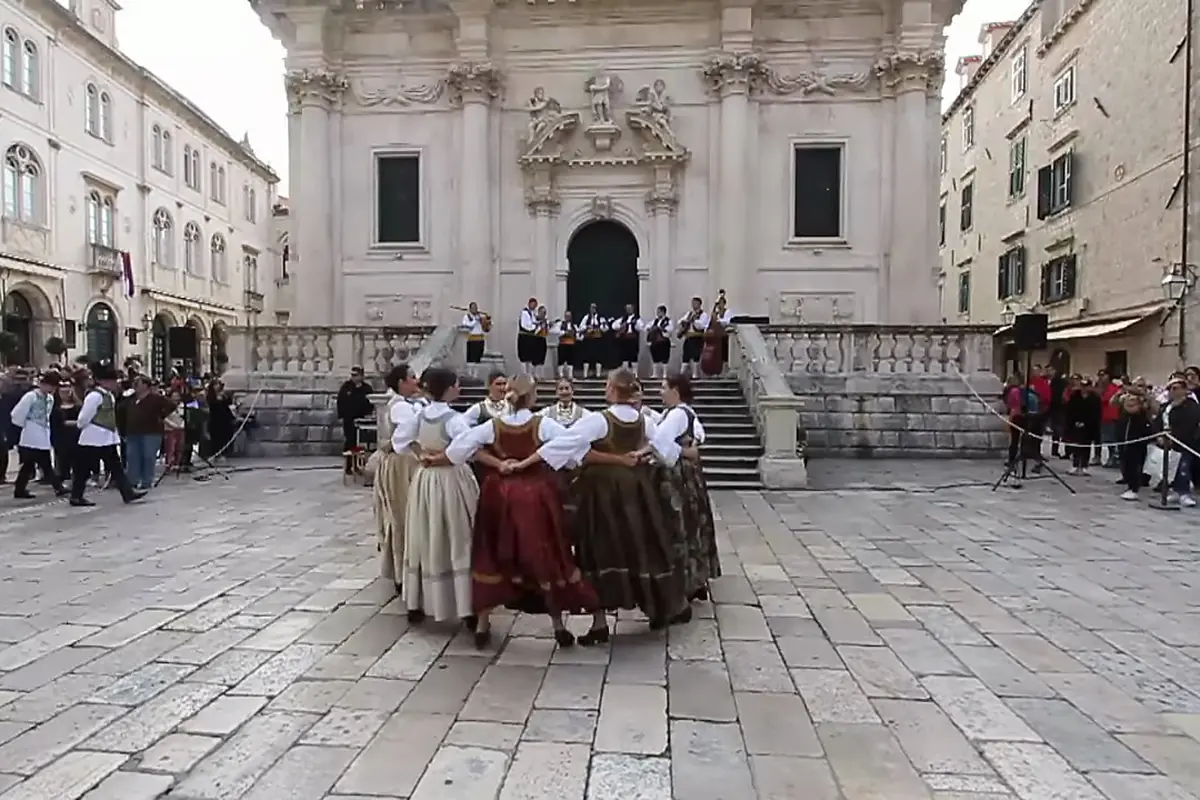
Picture a concert of Croatian folk culture put on by people who dance and sing for love of it. The costumes, the circle formations and the klapa harmonies are the draw, and the pace is brisk because the ensemble builds its numbers for an audience rather than for a village festival. You do not need Croatian or any knowledge of folklore to follow: movement and music carry the show, and the dances are described in the guides here so you can recognise what you are watching. Arrive curious and you will get the most out of it.
Croatian folklore is regional
Croatian folk dance varies from region to region, and that is the idea a show like this can put on one stage. Wikipedia's survey of Croatian dance lists the lively dances of Slavonia, the Venetian-influenced dances of Istria, the kolo of Lika, which can be danced in silence, and, from Dubrovnik and southern Dalmatia, the linđo, which it says carries a distinct Mediterranean influence. A programme that moves between those regions shows costume, rhythm and instruments changing as it goes. That variety is the best reason to sit through a full 70 minutes instead of a single dance.
Read next: Linđo: the Dubrovnik dance
What you will see and hear
The ensemble shows Croatian folk culture in several voices at once: movement, song, instruments and cloth. Which items you meet is the ensemble's choice on the night, so read the list below as a map of the art form rather than a running order, and treat any single dance as a possibility, not a promise. What stays constant is the mix, which is why one ticket covers dancers, singers and an orchestra in the same hour.
- Traditional dances, including circle dances (kolo) from Croatia's regions
- Traditional songs, some sung by the ensemble's klapa without instruments
- Orchestral music that accompanies songs and dances
- Folk costumes that change from region to region
Choosing your date
A date exists only where the booking calendar lists it, and each comes with its own start time, so neither is worth guessing. Settle the show first and arrange the rest of your Dubrovnik stay around it. Through GetYourGuide you can cancel without charge until a day before and pay later, so holding a place while your plans settle costs nothing today. If several dates are open, pick the one that leaves the most room before and after, since the walk from the Old Town to Lazareti is on foot.
What travellers say
Travellers rate the show close to the top of the scale. The praise is consistent: energetic dancing, lively music and striking costumes, with some describing it as a worthwhile overview of Croatian culture. The one recurring complaint is practical, not artistic, and concerns the seating. Read that as a sign of what the evening is: a performance people leave happy about, in a historic hall that was not designed as a theatre. If you rank comfort first, think about your own tolerance for an hour on a plain seat before you book. Wear clothes you can sit in for over 70 minutes, and leave bulky bags at your accommodation. Your confirmation shows how to enter and where to go once you are at Lazareti.
Booking here or with the ensemble
This site is an independent guide, and its buttons send you to GetYourGuide, which handles the booking and the payment. The ensemble's own site lists an email address and phone numbers for enquiries, which is the route for questions about access, groups or anything the booking page does not answer. Keep the cancellation terms straight: the 24-hour free-cancellation window belongs to bookings made through GetYourGuide, and any other arrangement made directly with the ensemble has its own conditions. Questions about group sizes, for example, are better put to the ensemble than guessed at.
How it compares with other options
The ensemble also performs at city events, among them Dubrovnik Summer Festival evenings, which the City of Dubrovnik's event calendar lists; those entries change and carry their own details, so treat them as a bonus, not a plan. Klapa groups sometimes sing informally in Dalmatian towns in the evening, but you cannot schedule that. A ticketed show is the one version of Croatian folklore you can fix in your diary weeks ahead, with a cancellation window if the trip shifts. It also gives you a confirmation to keep, with a defined start time, which informal singing and festival listings cannot offer.
Read next: Klapa singing: Dalmatia's close harmony
Getting to the door
Lazareti stands just outside Ploče Gate, the eastern entrance of the walled city, so you reach it on foot from the Old Town by walking out through that gate. The Old Town is closed to traffic, and Dubrovnik's mayor has announced a ban on wheeled luggage there, so leave suitcases behind. The full walking route, the history of the building and what to expect inside have their own guide. Keep the address, Ulica Frana Supila 8, saved on your phone, and rely on your confirmation for the entry instructions once you reach the complex.
Read next: Lazareti Dubrovnik: where the show is
Who this isn't for
Skip this ticket if you want dinner with your entertainment, because the ticket carries no food. Skip it if you need a start time before you can commit, because the calendar sets that date by date. It is also not the right choice for anyone hoping to join in: this is a seated, staged performance by an amateur ensemble, and travellers who want folk culture in a village square or on a restaurant terrace should look for something different. It is also no use outside the season: with no dates in the calendar, nothing is on sale, so check before you build your stay around it. For everyone else, it is a lively, costumed hour.
Frequently asked questions
How long is the Dubrovnik folklore show?
Around 70 minutes. Each date in the calendar has its own start time, which lets you place dinner before or after. Leave a margin for the walk from the Old Town to Lazareti, on foot and out through Ploče Gate.
Does the show run every night?
No, it is seasonal and only some evenings are on sale. Look at the calendar for the open dates and their start times before assuming a weekday or a clock time.
Can I cancel the booking?
Yes. A booking made through GetYourGuide is refunded in full if cancelled at least 24 hours before the show, and a reservation can be paid for later, which suits travellers whose dates are still moving. Terms agreed directly with the ensemble are separate.
Is food or drink included?
No. The ticket pays for the live show alone. Eat before or after in the Old Town, and start from the calendar's start time when you plan the rest of the evening.
Is the show wheelchair accessible?
The booking page marks it wheelchair accessible. For details about your seat or route, write to the ensemble after you book; its own site lists an email address and phone numbers for exactly that kind of question.
Where is the show held?
At Lazareti, Ulica Frana Supila 8, just outside Ploče Gate on the east side of Dubrovnik's Old Town. The complex was built as a quarantine station and is now a cultural quarter, so it is a stone building, not a purpose-built theatre.
Sources
- Folklorni ansambl Linđo (the ensemble's own site)
- Dubrovnik tourist board: the Lazarettos at Ploče
- Dunin, village folklor as a touristic commodity in the Dubrovnik area (Narodna umjetnost, 2009)
- Linđo (Wikipedia)
- Lazzarettos of Dubrovnik (Wikipedia)
- Dubrovnik city events calendar: Linđo Folklore Ensemble
- Dubrovnik (Wikipedia)