Getting there, and what to expect
Lazareti Dubrovnik: where the show is
Where Lazareti is, how to walk there from the Old Town, what the old quarantine complex was and what to expect inside during the show.
Reserve a seat for the show ↗Quick answer
Lazareti stands on Ulica Frana Supila, just outside Ploče Gate on the east side of Dubrovnik's Old Town. From inside the walls you walk out through that gate, and the Old Town itself is closed to traffic. The folklore show lasts about 70 minutes, is marked wheelchair accessible and runs only on dates open in the booking calendar. Your confirmation carries the start time and the way in.
Where Lazareti is
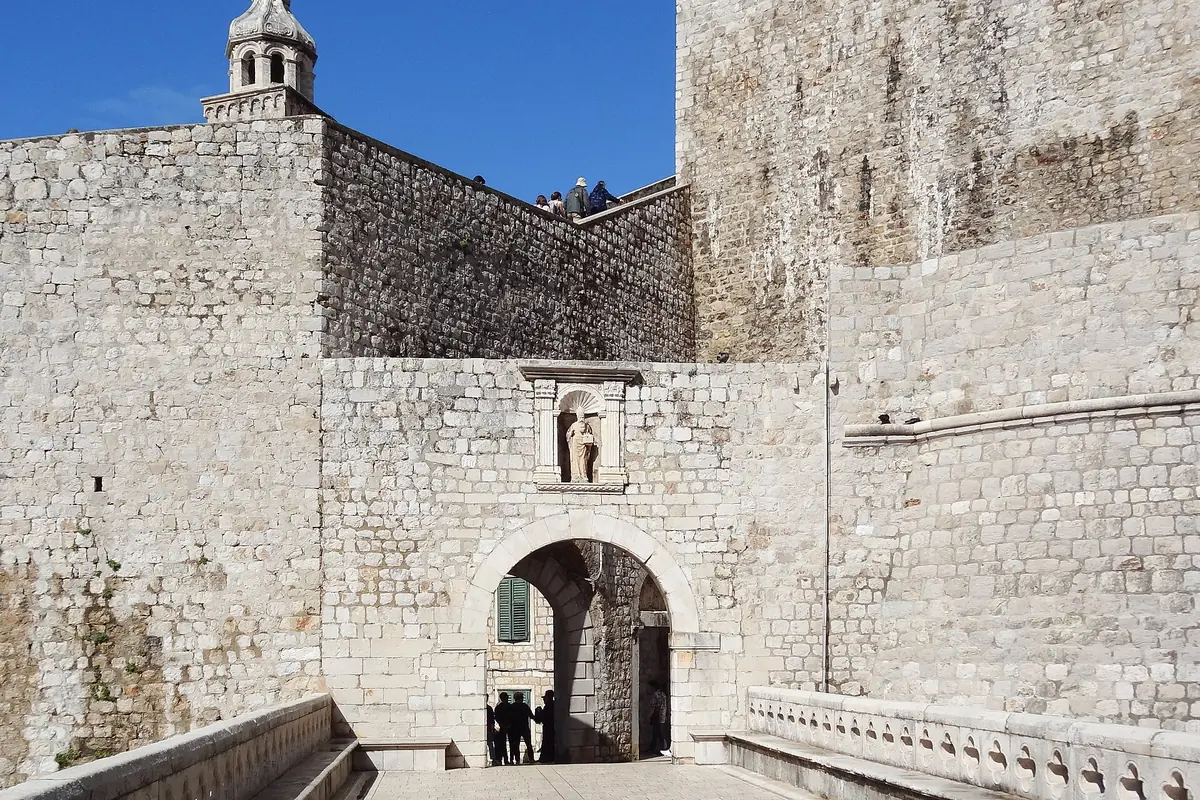
Lazareti sits east of Dubrovnik's Old Town. The tourist board describes it as the complex you face when you walk towards the city's eastern entrance at Ploče, and the show's address is Ulica Frana Supila 8. That puts it outside the walls, not inside them, which surprises some visitors who expect everything to sit on the main street. Ploče Gate is the landmark to aim for. Once you pass through it and cross the stone bridge, you have left the walled city and Lazareti is the next thing you meet. A practical note: one local walking guide says the route outside the walls toward Ploče climbs a little, so allow for that on the way back.
A quarantine station turned cultural quarter
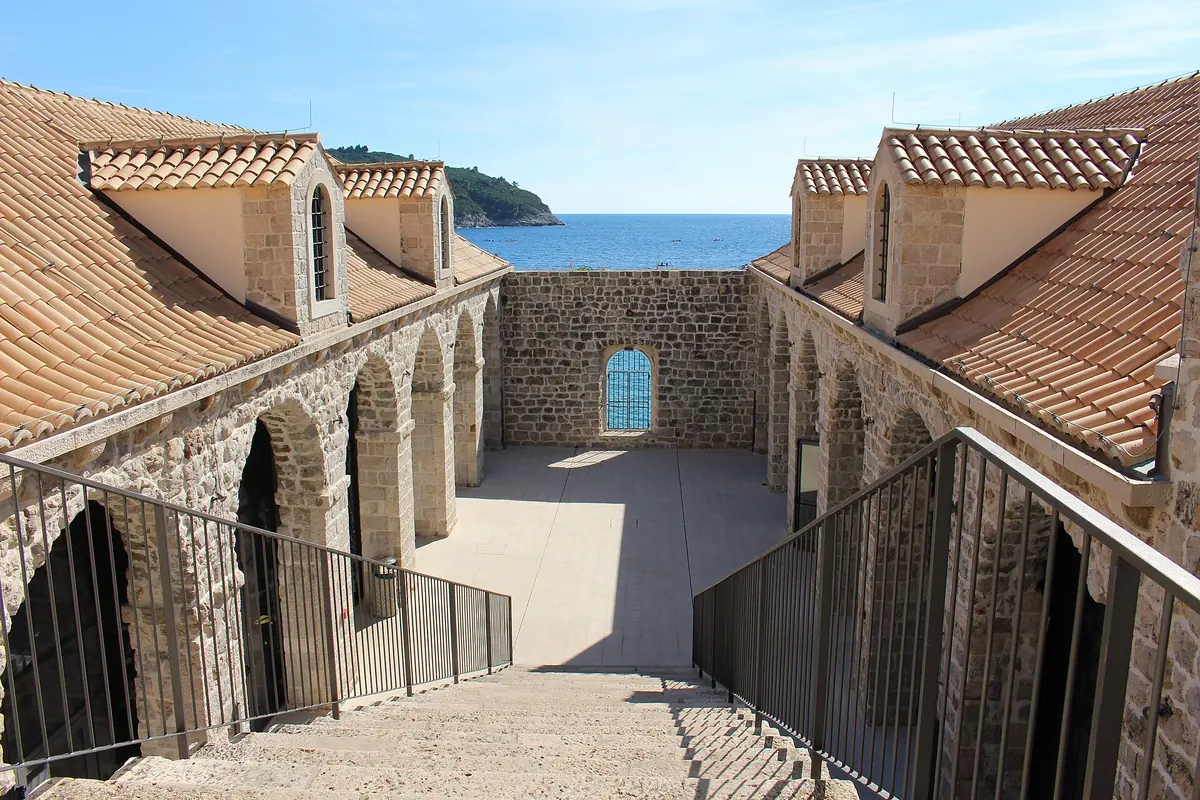
The Republic of Ragusa introduced quarantine in 1377 to keep epidemics out of its trading city, and Lazareti is the surviving complex built for that job. Wikipedia describes it as a group of interconnected buildings, with arcaded courtyards, completed in the 1640s after a long building period. The complex served as a quarantine station into the nineteenth century and was later used for other purposes. Today it carries the name Lazareti, creative quarter of Dubrovnik, as a place for cultural and creative activity, and the Linđo Folklore Ensemble stages its show there.
Walking from the Old Town
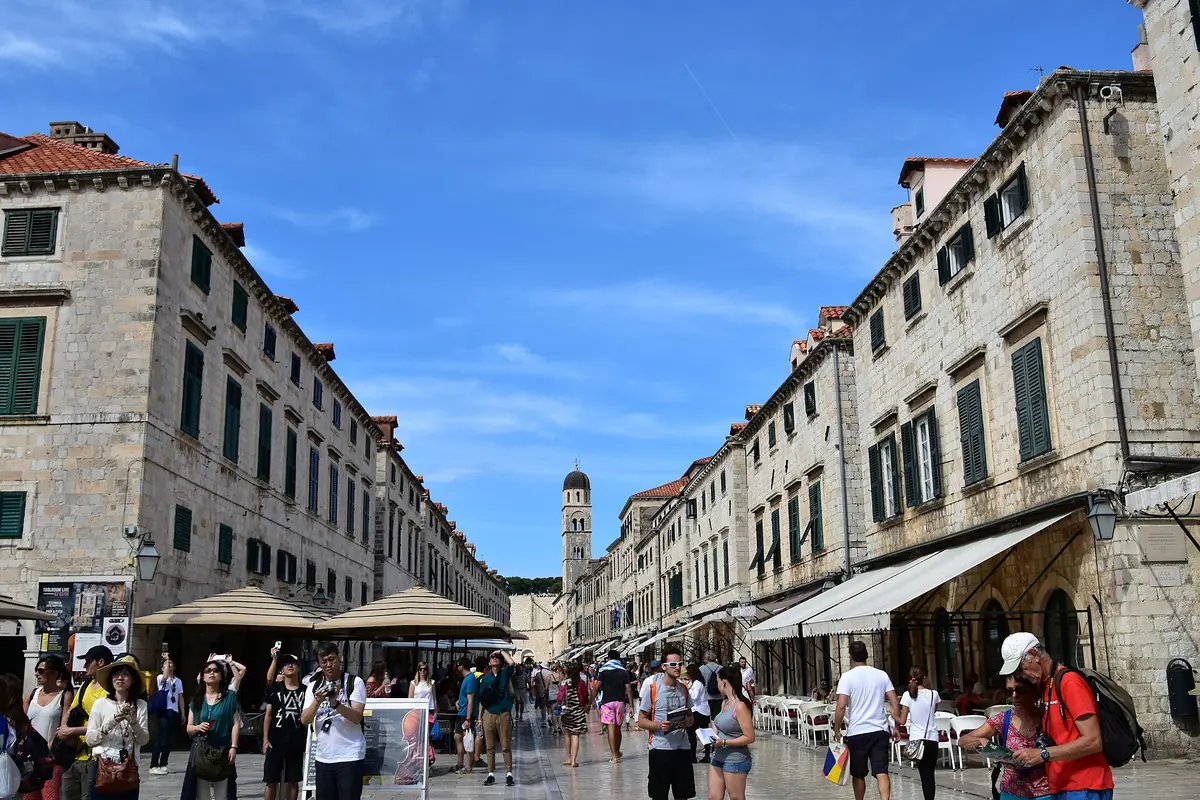
From inside the walls, head for the eastern end of the Old Town, where Luža Square meets the main street, the Placa, also called Stradun. Ploče Gate is the eastern gate, and the walk is on foot because the Old Town is closed to traffic. The streets are marble paving that one local guide calls tough on the feet, with stones that are not completely level, so soft-soled flat shoes work better than heels. The Little Onofrio's Fountain at the eastern side of the Placa is a handy marker on the way. Treat the route as a stroll with a clear landmark, then give it a margin: the start time in your confirmation is when the show begins, not when you should leave your table.
By bus
If you are staying outside the Old Town, Dubrovnik's city buses are run by Libertas, whose site publishes the timetables, a network map and an app with real-time arrivals. Use that map to find a stop near Ploče Gate rather than trusting a number from a blog, because routes and stops change between timetables. From there you walk to Lazareti, which is a short step beyond the gate. Whichever way you go, work out the route in daylight if you can, and keep the address, Ulica Frana Supila 8, saved on your phone. Buses are one option, but for anyone staying inside the walls, walking in from the Old Town is the simpler way to arrive.
Luggage and the Old Town
Dubrovnik's mayor has announced a ban on wheeled luggage in the Old Town, to limit noise on its paved streets. The practical result for a show visitor is simple: do not turn up with a suitcase. If you are travelling between a morning arrival and an evening show, leave your bags at your accommodation or with the lodging's reception, then walk in with only what you need for the evening. That also keeps your hands free on the uneven stone of the streets, where a bag is one more thing to manage. The ban is aimed at the noise wheels make on the paving, which is why a rolling suitcase is the one thing to leave behind.
Inside: seats, length and access
The show lasts about 70 minutes and is seated, in a historic complex that began life as a quarantine station, not a theatre. A few travellers say the seats are not comfortable, even while praising the show, so dress for sitting and do not plan a tight schedule straight afterwards. While you wait for the show to begin, the building is worth a look in its own right: stone arcades and courtyards, built to handle goods and people at the edge of a trading city. The booking page marks the show wheelchair accessible. For specifics such as your seat position or the route from the gate, write to the ensemble after you book; its site lists an email address and phone numbers.
Language, songs and what you will hear
You need no Croatian. The dances, costumes and music carry the evening, and the songs are traditional Croatian ones sung by the ensemble's klapa. Klapa is close-harmony singing without instruments, and UNESCO added it to its intangible heritage list in 2012. An orchestra also plays. Because the programme is the ensemble's choice on the night, you may hear a mix of unaccompanied songs and music with instruments, so listen for the shift between the two, and for how the singers' blend differs from the orchestra's sound. The words will pass you by if you do not read Croatian, but the harmonies carry the mood on their own.
Read next: Klapa singing: Dalmatia's close harmony
Finding the right door
Lazareti is a large complex of interconnected buildings around several courtyards, and it hosts more than one activity, so the street address alone may leave you wandering. Use Ulica Frana Supila 8 and the entry instructions in your confirmation, and follow the signs and other ticket holders once you are inside the gate. If you are unsure, ask at the complex or message the ensemble, whose own site lists contact details. A quiet minute spent finding the entrance beats arriving as the show starts.
Read next: Dubrovnik folklore show tickets
Season and the booking calendar
Because the show is seasonal, only selected dates are on sale, and the booking calendar is the one place that lists them. Open it first, pick a date, then read the start time beside it. Bookings made through GetYourGuide can be cancelled free until 24 hours ahead and paid for later. Do not rely on a weekday pattern you have read elsewhere: schedules for seasonal events change, and the calendar always carries the current dates.
Planning the rest of the evening
Because the ticket covers the show alone, dinner is yours to arrange, before or after. Eating beforehand works well if the calendar shows an earlier start; if it shows a late one, you can eat first and still reach the door unhurried. The Old Town offers plenty of places to do both, and the walk back through the gate puts you in the middle of it. A separate guide suggests how to shape the evening around the show. Allow time to walk back through Ploče Gate afterwards; the main street leads on to the rest of the Old Town.
Read next: An evening in Dubrovnik around the show
Who this isn't for
This is not the right plan if you cannot manage a walk over uneven stone and a seated hour, if you want a venue with a dining table, or if you need to know your start time before choosing a date. It also will not suit anyone who hopes to see the Old Town's sights from inside the show: the performance is staged in the complex, not on the walls or the streets. It will also frustrate anyone who turns up without checking the calendar, because the show is seasonal and the dates are limited. For everyone else, it is a short, lively evening a few steps from the gate.
Frequently asked questions
Is Lazareti inside Dubrovnik's walls?
No. It stands just outside Ploče Gate, on the east side of the Old Town. You walk out through the gate to reach it, so allow a margin when you plan the evening around the start time.
Can I walk to Lazareti from the Old Town?
Yes. The Old Town is entirely pedestrian, so you walk to Ploče Gate and out to Lazareti on foot. The paving is marble that can be uneven, so wear soft-soled flat shoes and keep a margin for the walk.
Is there a bus?
Dubrovnik's city buses are run by Libertas, which publishes timetables, a network map and an app. Check its map for a stop near Ploče Gate, because routes and stops change between timetables, and keep the walk from the stop in your margin.
Is the show wheelchair accessible?
The booking page marks it wheelchair accessible. For details about your seat or the route from the gate, write to the ensemble after you book; its own site lists an email address and phone numbers, which is the quickest way to settle specifics before the evening.
Do I need to speak Croatian?
No. The dances, costumes and music carry the show, and the songs are traditional Croatian ones. You can follow the evening without any language, and the guides on this site explain the main forms you may see, such as the linđo, the kolo and klapa singing.
Can I bring a suitcase into the Old Town?
Leave it at your accommodation if you can. Dubrovnik's mayor has announced a ban on wheeled luggage in the Old Town, and a show visitor needs nothing more than a small bag for the evening.
Sources